

You’ve seen the demos. Type a sentence, wait thirty seconds, and an AI spits out a finished-looking website. It’s genuinely impressive — and as a web design and development team, we’d be lying if we said we ignored it. We don’t. We use AI in our build process every week.
So here’s an honest take from people actually shipping sites with it: AI website development is powerful, it’s getting better fast, and it is not ready to run the show on its own. The gap isn’t in how a site looks on day one. It’s in everything that happens after — editing your content, and getting found on Google.
What AI website development actually gets right
Let’s give credit where it’s due. Used well, AI is a real accelerator:
- First drafts, fast. Layouts, starter copy, placeholder structure — the blank-page problem mostly disappears.
- Boilerplate and repetitive code. The tedious, mechanical parts of development are exactly where AI shines.
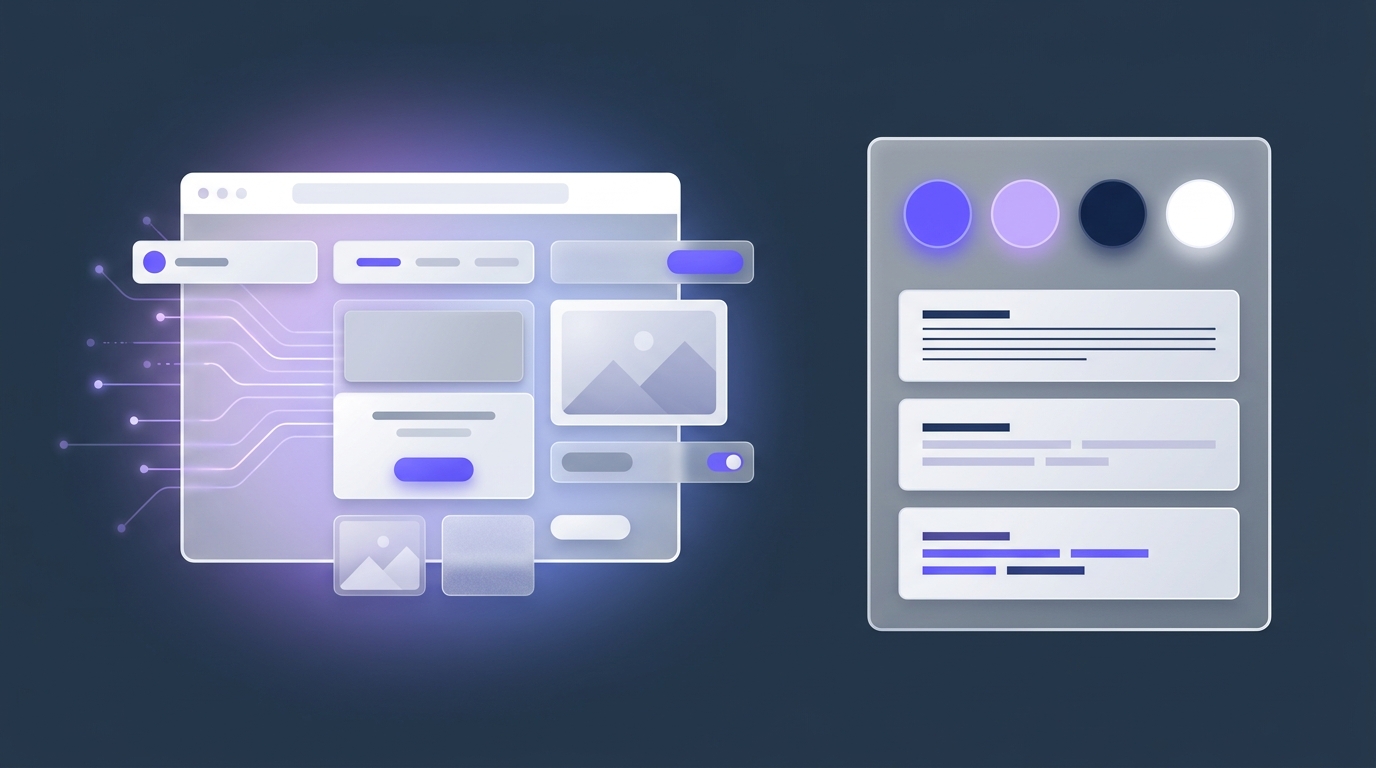
- Prototyping and early brand direction. This is where we lean on it most. AI lets us rapidly prototype layouts and get the foundations of a brand kit in order — color palettes, font pairings, tone, and overall look — so we can explore several directions fast and land on one with the client instead of guessing in isolation. It turns “let me build three mockups” from a week into an afternoon.
This is why we build with it. It makes a good team faster. What it doesn’t do — yet — is replace the judgment that makes a website actually work for your business.
Coming soon: we’re putting together a follow-up post that breaks down our actual AI-assisted process step by step — from brand kit and fonts through prototype to a launch-ready, editable site. Keep an eye on the blog.
Where it’s not there yet
1. It makes editing your own content harder
A website isn’t a poster you hang once. It’s a living thing — you’ll want to change a headline, swap a photo, add a service, update your hours. The whole point of a modern site is that a normal person can do that without calling a developer.
AI-generated sites often quietly break that. The output frequently ends up as tightly-coupled code rather than clean, editable content blocks in a real CMS. It looks great — until you (or your marketer) try to change one line and discover there’s no simple place to do it. You either learn to fight the code, or you’re back to paying someone every time you want to move a comma.
A website you can’t easily update isn’t finished. It’s a liability with good lighting.
2. It’s worse for SEO in practice — not in theory, in practice
This is the one that costs businesses real money, and it’s the least talked about.
Good SEO isn’t a one-time setting. It’s a hundred small, ongoing tweaks: page titles, meta descriptions, heading structure, internal links, image alt text, schema markup, redirects when a URL changes. An SEO specialist needs easy, direct control over all of that — the ability to open a page, adjust the title, tweak the copy, add an internal link, and publish. Minutes, not a dev ticket.
AI-generated sites tend to bury those controls inside generated code. The exact levers that move rankings become the hardest things to reach. So the site launches, looks modern, and then just… sits there, because nobody can efficiently optimize it. In our experience, that’s why a “great-looking” AI site can quietly underperform a plainer one built on a proper CMS. (It’s the same reason we tell people to choose a platform you can actually edit in the first place.)
3. SEO software can’t just overwrite the code
Here’s the technical reason behind #2. The tools that make ongoing SEO manageable — Rank Math, structured-data generators, redirect managers, analytics hooks — are built to plug into a real content platform (like WordPress). They expect a CMS layer they can read from and write to.
SEO software can’t reach in and rewrite hand-generated site code. When a site is a bespoke pile of AI-produced markup with no CMS underneath, those tools have nothing to hook into. You lose the entire ecosystem that makes SEO repeatable and cheap — and you’re left doing by hand, in code, what should take a marketer thirty seconds in a dashboard.
4. And someone still has to own it
Six months from now, when something needs to change, “the AI built it” isn’t an answer. Sites need maintenance, security updates, and a human who understands how the thing is put together. AI can write code; it can’t be accountable for it.
The right way to use AI in web development
None of this means “avoid AI.” It means keep a human in charge and keep the site editable. The way we approach it:
- AI assists; it doesn’t decide. We use it to move faster on drafts and code, then apply real design and strategy on top.
- Everything lands in a real, editable CMS. You (or your marketing team) can change content without touching code — and so can we.
- SEO tooling stays in the loop. Titles, meta, schema, and redirects live where the software that manages them can actually control them.
- A person owns the result. Not a prompt.
That’s the difference between a website that demos well and one that works — one you can grow, update, and rank over time. If you’re weighing your options, our guide on picking the right website design team walks through what to look for.
The bottom line
AI website development is a genuinely useful tool, and it’s improving quickly. We’re glad it exists and we build with it every day. But building a site that looks good is the easy 80%. The last 20% — making it truly easy to edit, and genuinely good for SEO — is exactly where AI still falls short, and exactly where an experienced team earns its keep.
If you want a website that’s modern and something you can actually update and rank — built by people who use the best tools without handing over the wheel — let’s talk. Call Snazzy Solutions at (919) 444-2005 or tell us what you need.