
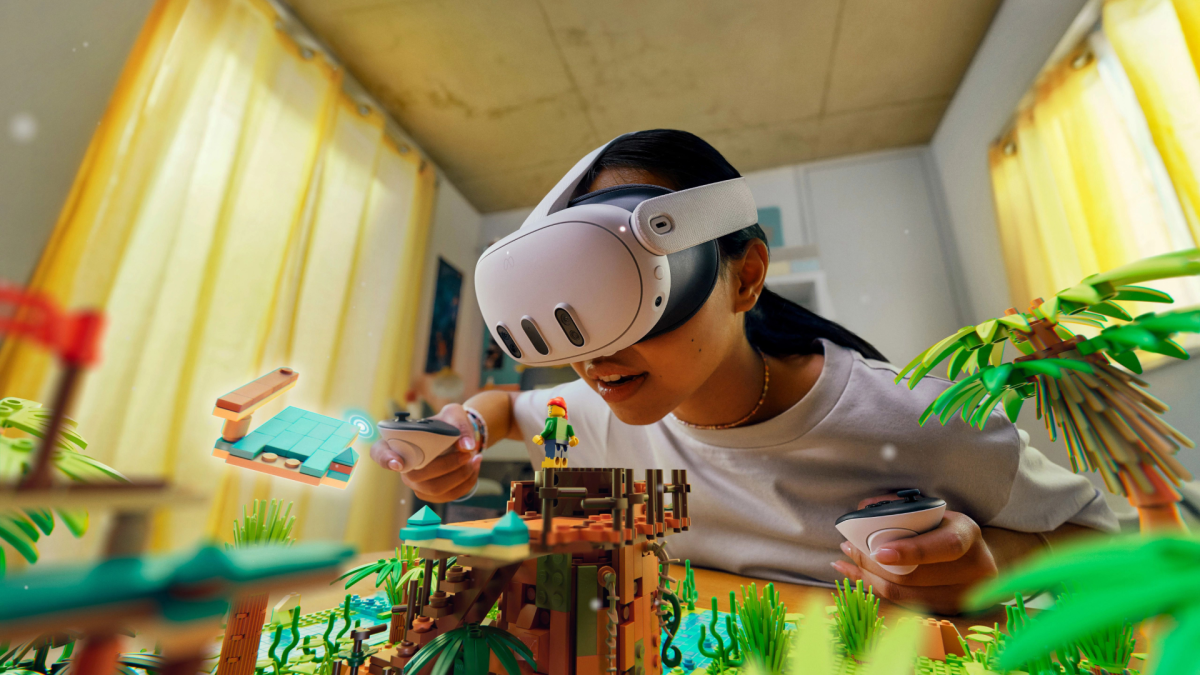

If you woke up today to an email from Meta with the subject line “Important changes to Meta Horizon Worlds on Quest” — you’re not alone. The message is blunt: Meta Horizon Worlds on Meta Quest is being discontinued as of June 15, 2026. The mobile app version will survive, but the VR experience — the one Meta bet its entire company rebrand on — is done.
The Reddit community’s reaction was about as sympathetic as you’d expect — a collective “we told you so” from people who saw this coming years ago. One comment summed it up perfectly: “The sucking sound of tens of billions invested in the metaverse disappearing into nothing.”
But here’s what most tech blogs aren’t talking about: What does this actually mean for businesses that invested time and money into metaverse marketing? And more importantly — what should you be doing with your marketing budget instead?
Why We Care About This (More Than Most Web Design Companies)
Before we get into the business implications — a bit of context. We’re not writing this as outsiders looking in. Our team has been deep in VR and AR since it became consumer-ready. We were among the first to get our hands on the original Oculus Quest, were accepted into Meta’s Horizon Worlds Builder Tracks program, and have been testing every major headset release since.
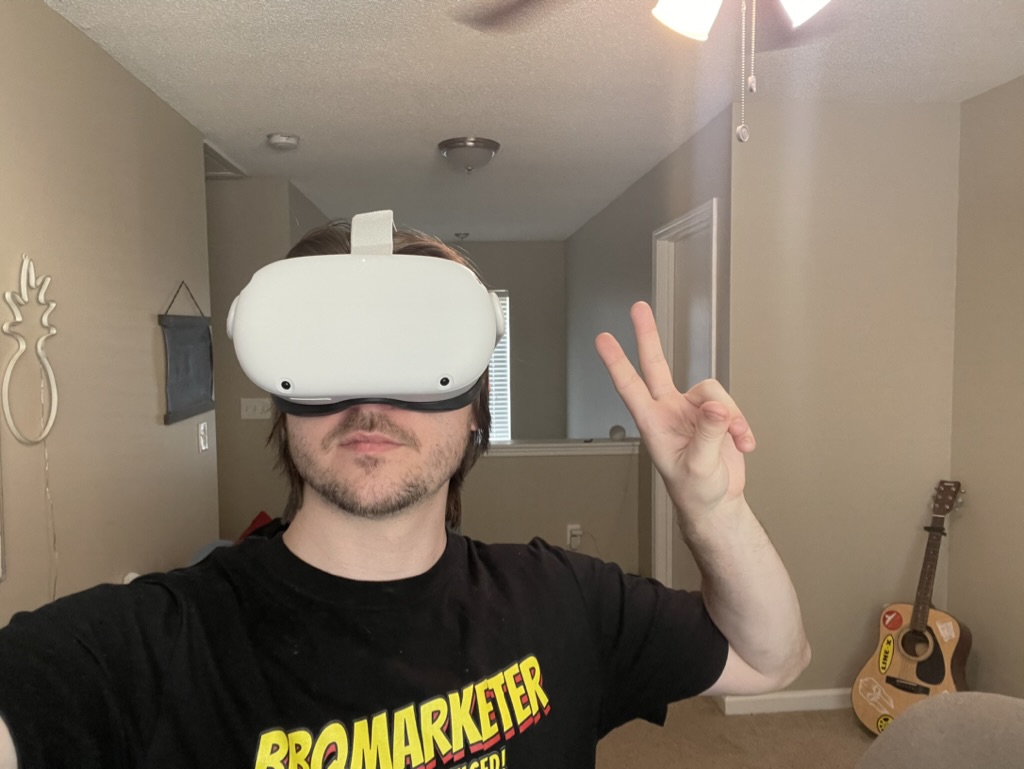
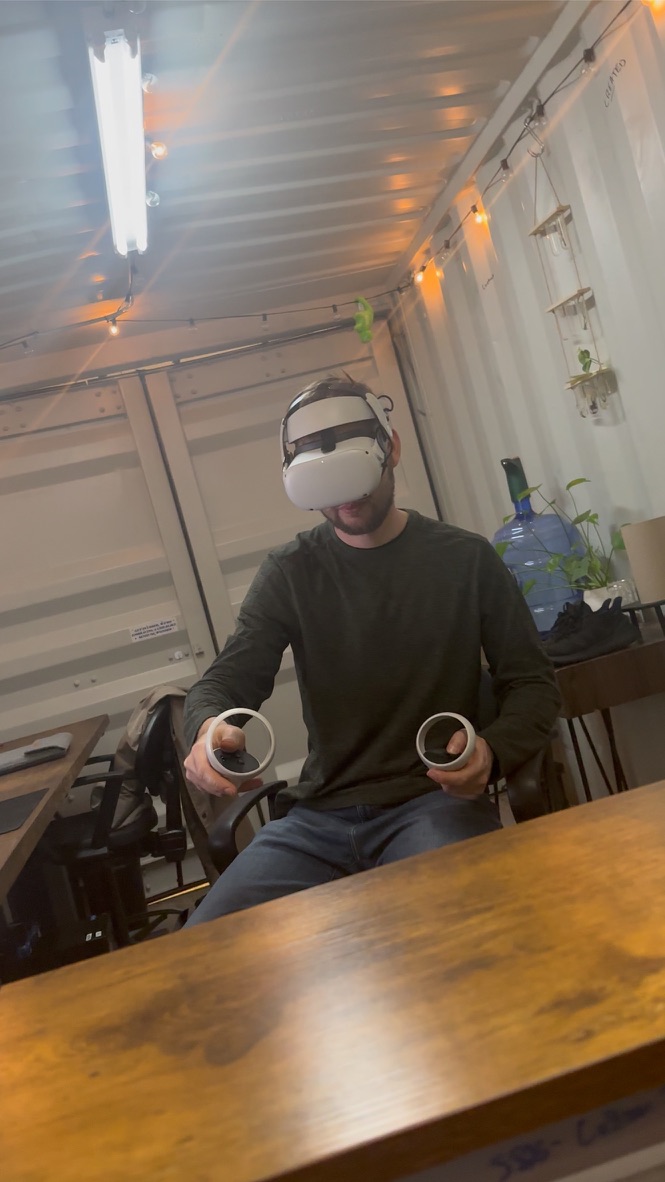
We say this not to brag, but because it matters: we’re huge advocates for VR and AR technology, and we still are. The hardware is incredible. The Quest 3’s mixed reality is genuinely impressive. We still use our headsets regularly and we’ll keep monitoring every development in this space.
But being enthusiastic about the technology is exactly why we can tell you honestly: VR is not ready as a marketing channel for most businesses. We’ve watched it from the inside. We know the difference between “this tech is amazing” and “this will get your business more customers.” Right now, those are two very different things.
What Actually Happened to Meta’s Metaverse
The Quest shutdown isn’t a single event. It’s the final chapter of a slow-motion collapse that’s been building for months:
- February 16, 2026: Meta permanently shut down Horizon Workrooms — their VR meeting platform that was supposed to replace Zoom. All user data was deleted.
- February 20, 2026: Meta stopped selling commercial Quest headsets and accepting new customers for its Quest for Business program. Existing customers will receive free licenses through January 2030, but the writing is on the wall.
- March 17, 2026: Meta emailed users announcing Horizon Worlds on Quest shuts down June 15, 2026. The mobile app survives, but the VR world-building platform — and everything businesses built inside it — goes dark on Quest headsets.
Meta’s official spin? They’re “focusing on mobile development, bringing new experiences to even more people.” Translation: the VR metaverse experiment failed, and they’re quietly pivoting to something that might actually attract users.
Over $83 Billion Spent — What Do They Have to Show for It?
Meta’s Reality Labs division — the team behind the metaverse — has burned through over $83 billion in operating losses since late 2020.
Let that number sink in. Eighty-three billion dollars.
- 2025 alone: $19.2 billion in losses on just $2.21 billion in revenue
- Q4 2025: $6.02 billion lost in a single quarter — the worst quarter in Reality Labs history
- 2026 outlook: Meta’s CFO Susan Li says losses will continue at “similar levels”
At its peak, Meta’s Horizon platform (Worlds and Venues combined) had around 300,000 monthly active users. By late 2022, that number dropped below 200,000 — missing Meta’s own internal target of 500,000. For context, VRChat (a free competitor built by a small team) was thriving while Meta’s billion-dollar platform couldn’t retain users.
As one Reddit commenter put it: “It’s just so funny they believed so much in this that they changed the entire company’s name.”
The Brands That Got Burned
Meta wasn’t the only one pouring money into the metaverse. Some of the biggest names in business made big bets — and lost:
| Brand | What They Did | What Happened |
|---|---|---|
| Nike | Acquired RTFKT Studios for NFT sneakers | Shut RTFKT down in January 2025 |
| Wendy’s | Built “Sunrise City” in Horizon Worlds | Platform lost users; minimal ROI |
| Disney | Created an entire metaverse division | Shut it down entirely |
| Microsoft | Built an industrial metaverse team | Dissolved the team after 4 months |
| Walmart | Filed NFT and crypto patents for virtual commerce | Quietly backed out of metaverse plans |
| Adidas | “Into the Metaverse” NFT collection | NFT market collapsed |
If Nike and Disney couldn’t make metaverse marketing work with virtually unlimited budgets, what chance did a local business have?
The Real Lesson: You Don’t Own Rented Land
Here’s the part that matters for every business owner reading this — not just the ones who dabbled in VR marketing.
The metaverse collapse is the same story we’ve seen over and over again:
- Businesses built their entire presence on Facebook Pages → Facebook killed organic reach overnight
- Brands invested heavily in Vine → Twitter shut it down
- Companies poured money into Google+ → Google pulled the plug
- Creators built audiences on TikTok → constant ban threats and algorithm changes
- Businesses built virtual experiences in Meta Horizon Worlds → Meta is pulling the plug on Quest
The pattern is always the same: a tech company builds a platform, businesses invest time and money building on it, and then the platform changes the rules or disappears entirely.
The only digital asset you truly own? Your website.
No algorithm changes. No platform shutdowns. No surprise policy updates. Your website is yours — the domain, the content, the customer relationships you build through it. It’s the one piece of digital real estate where you set the rules.
What Businesses Should Actually Do With Their Marketing Budget
If the metaverse taught us anything, it’s that chasing the “next big thing” in marketing is usually a trap — especially for small and mid-sized businesses that can’t afford to lose the bet.
Here’s where smart businesses are putting their money in 2026:
1. Your Website (The Foundation of Everything)
Your website works 24/7. It doesn’t get shut down by a tech company. It doesn’t lose reach because of an algorithm update. And unlike a virtual world that peaked at 300,000 users, Google processes over 8.5 billion searches per day — and your website can show up in every single one that’s relevant to your business.
If your website is outdated, slow, or not mobile-friendly, that’s the first place your marketing dollars should go. A professional website that converts visitors into customers will cost far less than you think — and deliver ROI for years, not months.
2. Local SEO
For businesses that serve a local market, local SEO is the highest-ROI marketing channel that exists. When someone in your city searches for what you do, you want to be the first result they see — not buried on page three behind your competitors.
That means optimizing your Google Business Profile, building local citations, earning genuine reviews, and making sure your website is optimized for the search terms your customers actually use.
3. Content Marketing
Every blog post, guide, and resource you publish on your website is a long-term asset. Unlike a social media post that disappears from feeds in hours, a well-written blog post can drive organic traffic for years.
Meta spent over $83 billion on a platform that lasted about 4 years. A single well-researched blog post costs a tiny fraction of that and can generate leads indefinitely.
4. Email Marketing
Your email list is another asset you truly own. Social media followers can vanish overnight — just ask anyone who built a following on Vine, Google+, or Horizon Worlds. But your email subscribers? Those contacts are yours, on your terms.
5. A Website That Actually Converts
It’s not enough to just have a website — it needs to actively work as a sales tool. Clear messaging, fast load times, mobile optimization, strong calls-to-action, and a design that builds trust with visitors from the first second.
If your current site isn’t generating leads or sales, a website redesign is a better investment than any emerging platform will ever be.
The “Next Big Thing” Trap
Every few years, a new technology emerges and the marketing world collectively loses its mind:
- 2021-2022: “Every business needs a metaverse strategy!”
- 2017-2018: “Every business needs a chatbot!”
- 2014-2015: “Every business needs to be on Snapchat!”
- 2012-2013: “Every business needs a QR code strategy!”
Some of these technologies eventually found their footing — QR codes made a genuine comeback during COVID. But the businesses that jumped in early, spending big before the technology was proven? Most of them wasted their money.
The smartest approach for most businesses: nail the fundamentals first — your website, SEO, email, and Google Business Profile. Then experiment with emerging tech using a small percentage of your budget. Never bet the farm on a platform you don’t control.
Frequently Asked Questions
Is Meta Horizon Worlds completely shutting down?
No — only the VR version on Meta Quest headsets shuts down on June 15, 2026. The Horizon Worlds mobile app will continue. However, Meta has already shut down Horizon Workrooms (VR meetings) and stopped accepting new Quest for Business customers — so the enterprise VR side is effectively dead.
Why is Meta shutting down Horizon Worlds on Quest?
Meta says they’re “focusing on mobile development.” The reality is that the Horizon platform never gained meaningful traction — peaking at around 300,000 monthly users (Worlds and Venues combined) before declining — while Reality Labs accumulated over $83 billion in losses. Meta is also pivoting its resources heavily toward AI development.
What happens to businesses that built experiences in Horizon Worlds?
VR experiences will no longer be accessible on Quest headsets after June 15, 2026. Any investment in building branded VR worlds, virtual stores, or immersive marketing experiences within Horizon Worlds on Quest is effectively lost. The mobile app continues, but the VR world-building tools are going away.
Should my business invest in metaverse marketing in 2026?
For most small and mid-sized businesses, no. The metaverse as a marketing channel has not proven ROI, and the largest platform behind it is actively retreating from VR. Your marketing budget is better spent on proven channels like a professional website, local SEO, content marketing, and email marketing.
What’s the best alternative to metaverse marketing for small businesses?
Invest in digital assets you own and control. A fast, well-designed website with strong SEO will consistently outperform any emerging platform. For local businesses, Google Business Profile optimization and local SEO deliver the highest return on investment.
Is the metaverse completely dead?
The consumer metaverse as Meta envisioned it — everyone socializing and shopping in VR headsets — appears to be dead. Meta, Disney, Microsoft, and Nike have all pulled back significantly. Industrial applications like Nvidia’s Omniverse for 3D simulation continue to grow, but that’s a very different use case than marketing to everyday consumers.
The Bottom Line
Meta bet over $83 billion that the future of the internet was virtual reality. They were wrong — at least for now. And the businesses that followed them into the metaverse learned an expensive lesson about building on rented land.
The businesses that thrived through every platform change, every algorithm update, and every tech trend that came and went? They’re the ones who invested in what they own: their website, their content, and their customer relationships.
If you’re still running your business on an outdated website — or if you’ve been putting off that redesign because you were waiting for the “next big thing” — the next big thing is already here. It’s a website that actually works for your business.
Ready to invest in something that won’t get shut down? Let’s talk about your website, or give us a call at (980) 829-2172.